Control Cable vs Instrumentation Cable: Differences, Applications and Selection Guide
Control cables and instrumentation cables both carry electrical signals in industrial and commercial systems, but they do different jobs. A control cable carries the commands that switch and coordinate equipment, while an instrumentation cable carries low-level measurement signals from sensors back to a control system. Understanding the difference helps engineers, contractors and procurement teams choose the right cable for control panels, automation systems, monitoring equipment and process applications.
What Is a Control Cable?
A control cable is used to carry control signals between equipment, control panels, switches, relays and other components in an electrical or automation system. These cables are commonly used where reliable signal transmission is required to operate or coordinate machinery and equipment.
Control cables are available in different conductor configurations, insulation materials, shielding arrangements and voltage ratings depending on the installation environment. The appropriate construction should be selected according to the system requirements, installation conditions and applicable standards. Our full guide to control cables covers construction and types in more detail.
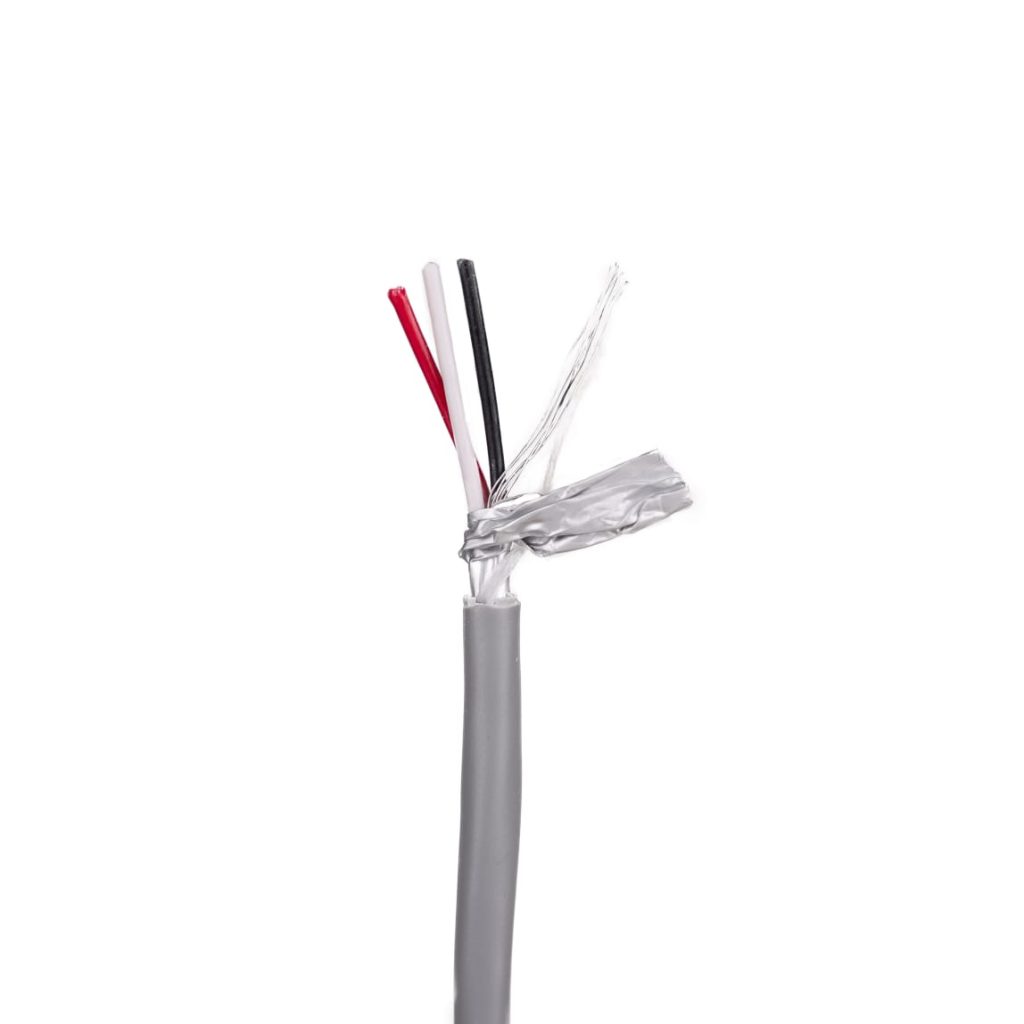
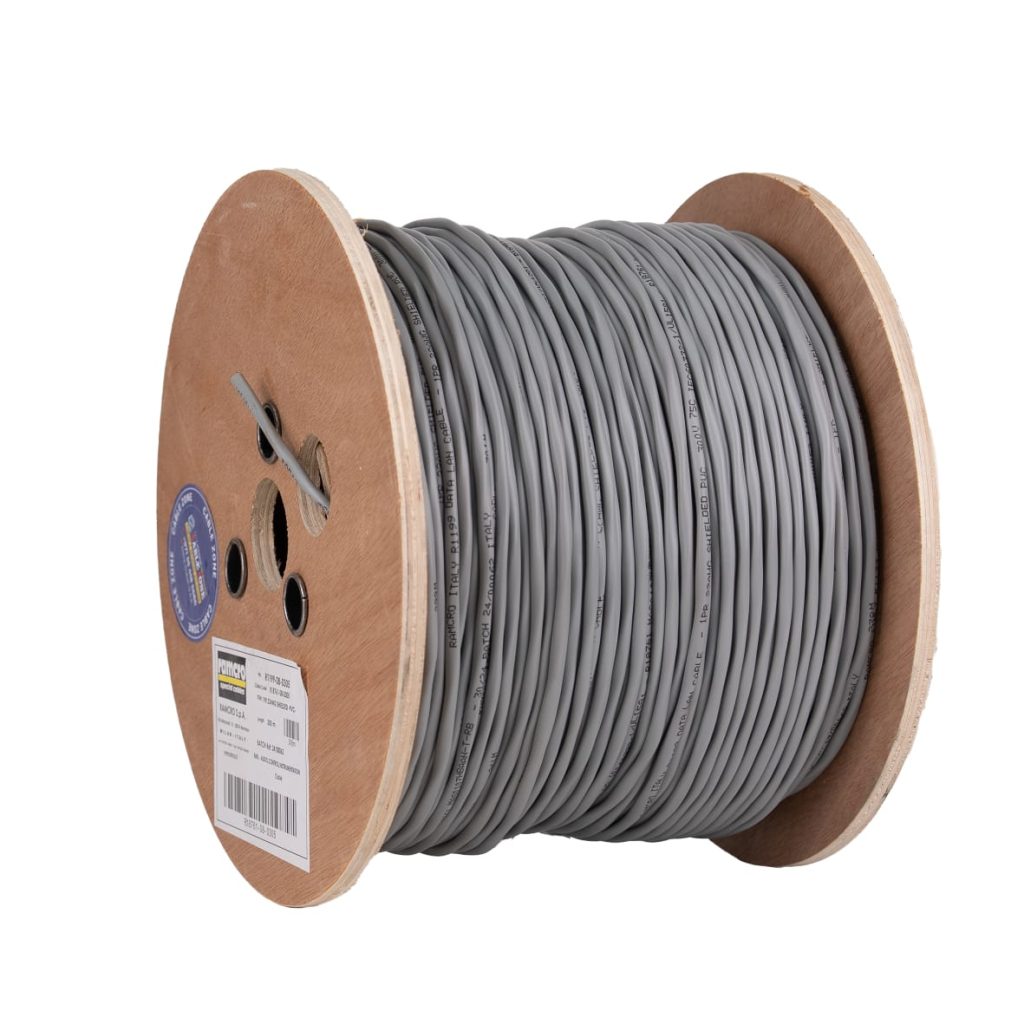
In building services, most control cable is low voltage multicore with conductors sized in AWG, supplied screened or unscreened. As a control cable supplier in the UAE, Cable Zone stocks this type from Ramcro and Belden on 305 m reels, including the Ramcro R1015 3 core 18 AWG screened cable shown here.
What Is an Instrumentation Cable?
Instrumentation cables are primarily designed for transmitting low-level measurement and process signals from sensors and field instruments to control systems. They are commonly found in process industries where accurate signal transmission is important for monitoring temperature, pressure, flow and other operating parameters.
Instrumentation cables may use individual or overall shielding to reduce electromagnetic interference and maintain signal integrity. The exact construction depends on the instrument, signal type and operating environment. A common example is Belden 8760, a single twisted pair of 18 AWG conductors under a foil shield.
If you are deciding whether a run needs a screen at all, our comparison of shielded and unshielded cables explains when each makes sense.
Control Cable vs Instrumentation Cable
Factor
Control Cable
Instrumentation Cable
Main purpose
Control and switching signals
Measurement and process signals
Typical applications
Control panels, machinery, automation systems
Sensors, process instruments and monitoring systems
Signal requirements
Control commands and electrical signals
Low-level measurement signals
Shielding
Depends on application and interference requirements
Commonly used where signal integrity is critical
Typical environments
Industrial, commercial and automation installations
Process plants and instrumentation systems
Where Are Control Cables Used?
Control cables are used wherever equipment has to be switched, sequenced or monitored, including:
Industrial control panels and automation systems
Machinery and equipment control circuits
Building and facility control systems
Motor and equipment monitoring circuits
Industrial electrical installations
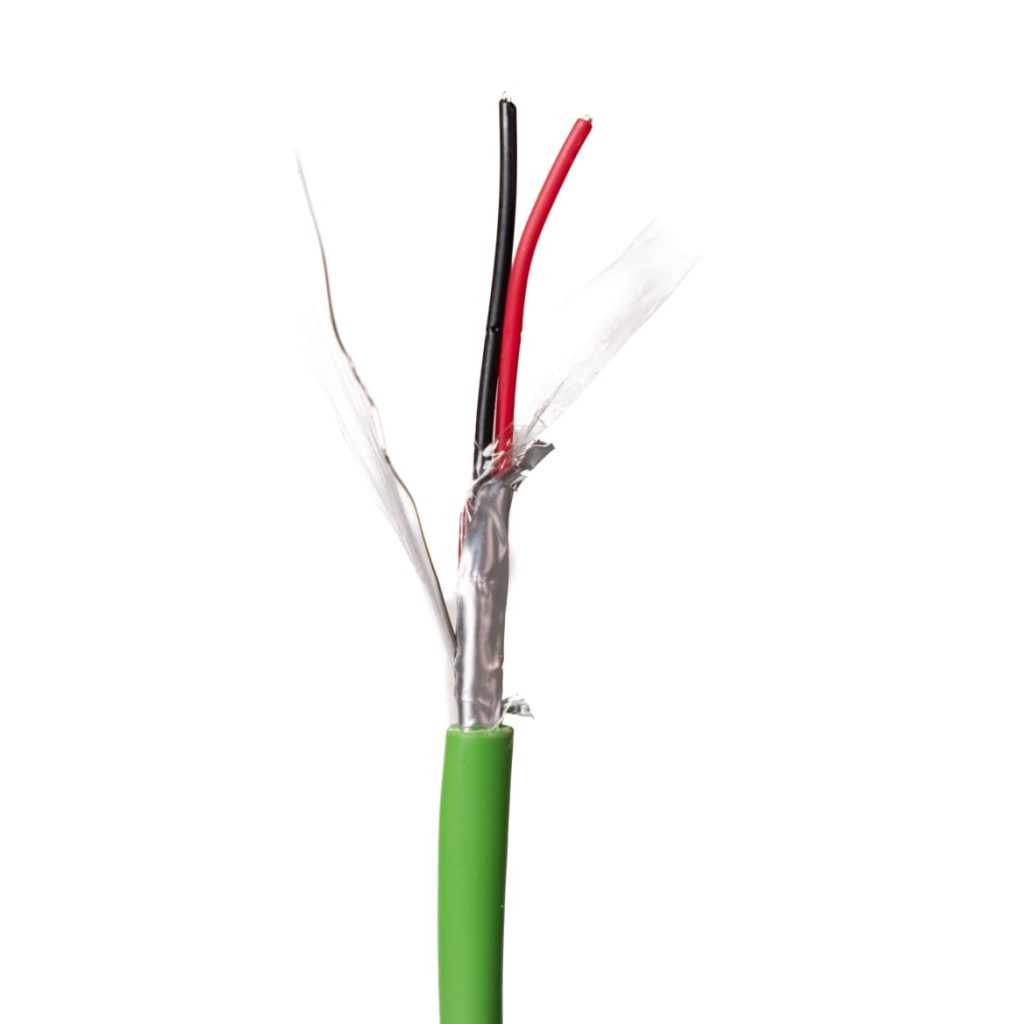
In building and facility control, building management, HVAC, access control and lighting systems all depend on control cable. In smart buildings, the bus that links switches, sensors and actuators uses dedicated KNX bus cable, such as the screened green Ramcro R1219 shown here.
Where Are Instrumentation Cables Used?
Instrumentation cables connect process control systems to the field. Typical uses include:
Process control systems
Temperature, pressure and flow measurement
Industrial sensors and transmitters
Plant monitoring and automation systems
Control and instrumentation networks
How to Choose the Right Cable
The right cable should be selected based on the type of signal, voltage and current requirements, shielding requirements, installation environment, temperature, mechanical conditions, fire and safety requirements, cable length and applicable standards. Conductor size matters more as runs get longer, because voltage drop rises with distance. Our guide to 16 AWG and 18 AWG control cable shows how the two sizes compare.
For industrial installations, it is also important to consider whether the cable will be installed indoors or outdoors, exposed to moisture or chemicals, subject to movement or mechanical stress, or routed close to sources of electromagnetic interference. Where a run is buried or exposed to impact, it may need armoured cable rather than a standard sheath.
Why Cable Construction Matters
Cable construction directly affects reliability and service life. Conductor material, insulation, shielding, jacket material and overall cable design should match the application. A cable selected only by its name or conductor count may not provide the required performance in a demanding environment. Our Ramcro buyer’s guide walks through matching construction to a project specification.
Choosing a Control Cable Supplier in the UAE
When sourcing control cables, buyers should evaluate the cable specification, manufacturer, available construction, technical documentation, application suitability and availability. A specialist cable supplier can help match the required cable construction with the project specification.
Cable Zone, in Naif, Deira, stocks screened and unscreened control cable from Ramcro cable and Belden. The range includes the Ramcro R1015, R1018 and R1258 multicore cables, the R1217 and R1219 KNX bus cables and Belden 8760. Browse the full product range or ask for the datasheet of the cable you need before you order.
Conclusion
Control cables and instrumentation cables serve different roles even though both are used for signal transmission. Control cables are generally used for control and switching functions, while instrumentation cables are designed for measurement and process signals. Selecting the right cable requires looking beyond the cable name and considering the complete application and installation environment.
Get in Touch!
Need a control or instrumentation cable matched to your project specification? Cable Zone Technology stocks Ramcro and Belden control cable in Dubai, with screened, unscreened and KNX bus options on 305 m reels.