When specifying network infrastructure for a project, one question often creates confusion: Should you use shielded or unshielded network cables?
The debate around shielded vs unshielded network cable is often treated as a product comparison. In reality, it is not about which cable is better overall, but about which cable is appropriate for the environment in which it will operate.
For IT managers, network engineers, and contractors working across the United Arab Emirates, this distinction matters even more. From commercial offices in Dubai to industrial facilities in Jebel Ali Free Zone (JAFZA) or Khalifa Industrial Zone Abu Dhabi (KIZAD), environmental factors such as electromagnetic interference, power density, and installation quality play a decisive role.
This guide provides a practical, environment-based framework to help you determine when shielding is worth the additional cost and complexity, and when it is unnecessary.
What Shielding Actually Does: Understanding EMI and Crosstalk
To understand the shielded vs unshielded network cable decision, it is important to first understand what shielding is designed to prevent.
Electromagnetic Interference (EMI)
EMI occurs when external electrical signals from nearby equipment interfere with data transmission in a cable. Common sources include:
- Power cables
- Transformers
- Industrial machinery
- HVAC systems
Crosstalk
Crosstalk refers to interference between cable pairs within the same cable or between adjacent cables. It becomes more significant in high-density installations.
Types of Shielding in Network Cables
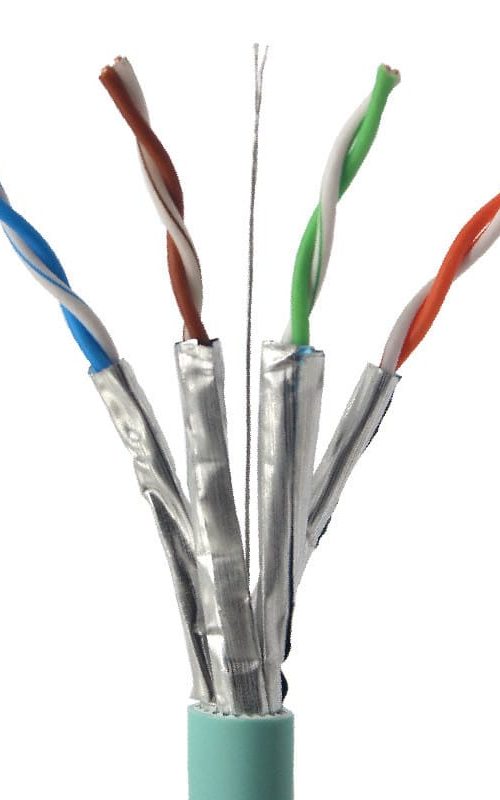
There are several shielding configurations used in structured cabling:
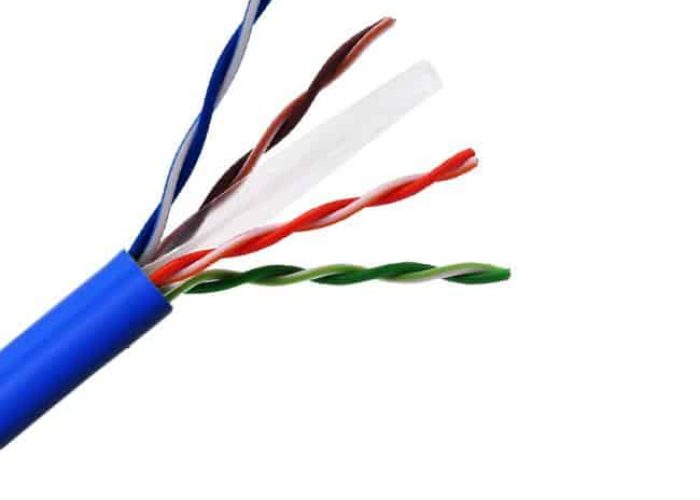
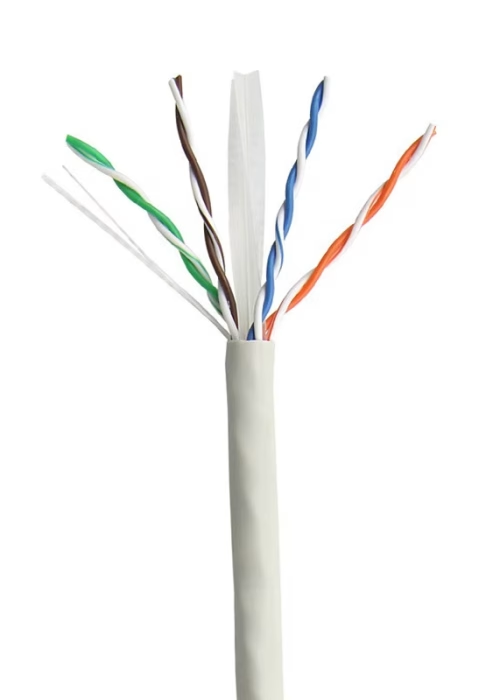
- UTP (Unshielded Twisted Pair) No shielding; relies on twisted pairs to reduce interference
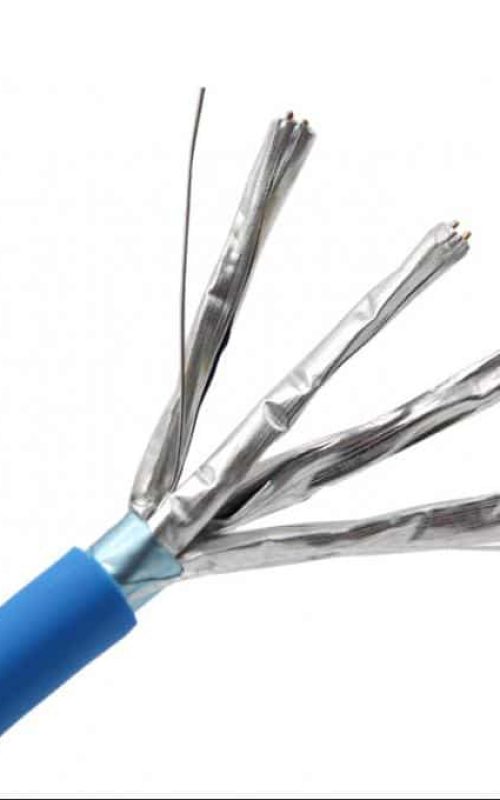
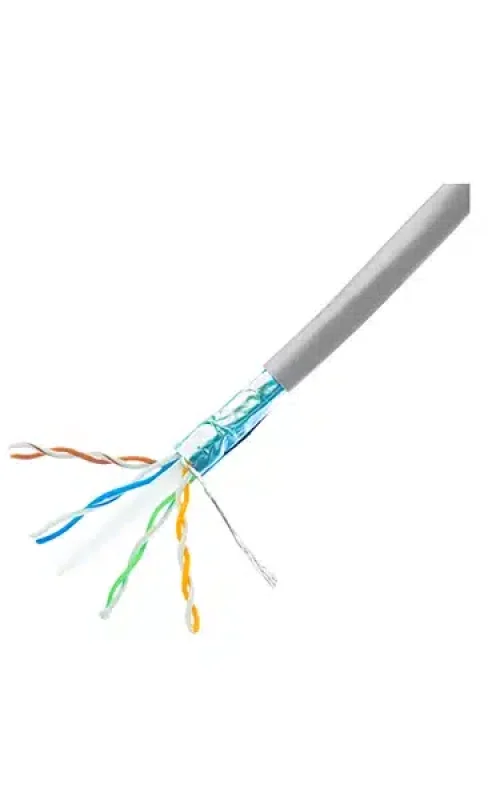
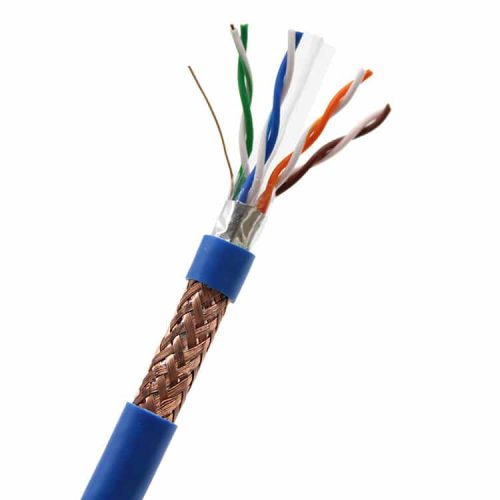
- FTP (Foiled Twisted Pair) Overall foil shield around all pairs
- STP (Shielded Twisted Pair) Shielding applied to individual pairs
- S/FTP (Shielded and Foiled Twisted Pair) Combination of overall shielding and individual pair shielding
Each type offers increasing levels of protection against interference, but also adds complexity in installation.To better understand how shielding relates to cable categories, you can explore how Cat 6 and Cat 7 handle shielding differently, which explains how different cable standards incorporate shielding.
Environment Classification: Where the Real Decision Happens
The choice between shielded and unshielded cables depends heavily on the environment. In the United Arab Emirates, installations typically fall into three categories:
1. Low EMI Environments
Examples:
- Open-plan offices
- Retail stores
- Residential buildings
- Standard commercial fit-outs
Characteristics:
- Minimal electrical interference
- Standard cable routing
- Limited proximity to heavy equipment
Recommendation
Unshielded Twisted Pair (UTP) is more than sufficient.
2. Medium EMI Environments
Examples:
- Hotel audiovisual rooms
- Server rooms within office buildings
- Mixed-use commercial developments
Characteristics:
- Moderate electrical equipment density
- Some parallel routing with power cables
Recommendation:
Foiled Twisted Pair (FTP) or selectively shielded solutions may be considered.
3. High EMI Environments
Examples:
- Industrial plants in JAFZA or KIZAD
- Data centres with dense power infrastructure
- Hospitals near MRI equipment
- Broadcast and media facilities
Characteristics:
- High electrical noise
- Dense cable routing
- Critical data transmission requirements
Recommendation
Shielded solutions such as STP or S/FTP are essential.
When Unshielded Cable Is Genuinely Sufficient
In most commercial projects across the United Arab Emirates, unshielded cables perform reliably when installed correctly.
Typical Scenarios:
- Office networks with standard workstation connectivity
- Retail environments with point-of-sale systems
- Residential structured cabling
In these environments:
- EMI levels are low
- Cable runs are relatively short
- Proper installation practices minimize interference
Adding shielding in such cases increases cost without delivering measurable performance benefits. To understand the construction and performance of commonly used cables, refer to Cat 6 cable specifications and construction, which explains why unshielded Cat 6 cables are widely used in commercial deployments.
When Shielding Is Non-Negotiable
There are environments where shielding is not optional.
Critical Scenarios:
1. Industrial Facilities
Machinery generates high levels of electromagnetic interference, making unshielded cables unreliable.
2. Data Centres with High Power Density
Parallel routing with power cables increases the risk of interference.
3. Healthcare Facilities
Equipment such as MRI machines generates strong electromagnetic fields.
4. Broadcast and Media Installations
Signal integrity is critical for uninterrupted transmission. In these cases, choosing shielded cables is not about optimizing performance, but rather about ensuring basic network stability.
Which Cable Should You Choose?
Choosing between coaxial and Ethernet cables depends on your specific requirements:
1. For High-Speed Internet:
If you want the fastest possible connection for gaming, streaming, or work-from-home setups, Ethernet cables, especially Cat6 or Cat7, are the best choice.
2. For Long-Distance Transmission:
Coaxial cables are more effective when the internet signal needs to travel longer distances without significant loss, such as between your main connection point and your modem.
3. For Stable Home Networking:
Ethernet cables ensure consistent performance across multiple devices, making them ideal for routers, smart TVs and computers.
4. For Older Infrastructure or Cable Services:
If your internet provider uses cable broadband, coaxial cables will still play a role in connecting your modem to the service line.
Installation Discipline Matters More Than Shielding
One of the most overlooked aspects of the shielded vs. unshielded network cable debate is the quality of installation.
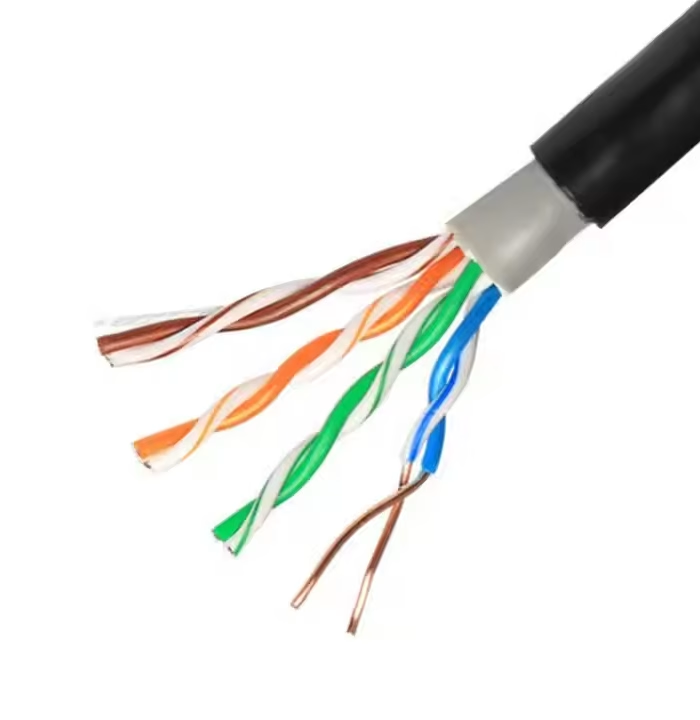
Many network issues are caused not by the type of cable, but by poor installation practices.
Common Installation Errors:
- Exceeding bend radius limits
- Running data cables too close to power cables
- Improper termination
- Poor cable management
Even the most advanced shielded cable will perform poorly if installed incorrectly. Conversely, a properly installed unshielded cable can perform exceptionally well in the right environment.
Grounding Requirements for Shielded Cables
Why Grounding Matters:
- Shielding works by redirecting interference to ground
- Without proper grounding, shielding becomes ineffective
- In some cases, it can worsen performance
Shielded cables introduce an additional requirement: proper grounding.
Common Grounding Issues:
- Incomplete grounding paths
- Improper termination of the shield
- Lack of coordination between installation teams
If grounding is not executed correctly, shielded cables can perform worse than unshielded cables. This is a critical consideration when specifying shielded solutions.
Cost, Availability, and Contractor Capability in the UAE
Shielded cables are more expensive than unshielded cables, but the cost difference extends beyond the cable itself.
Additional Cost Factors:
- Specialized connectors and patch panels
- Increased installation time
- Skilled labor requirements
- Testing and certification
Practical Considerations:
- Not all contractors are experienced in shielded installations
- Improper installation can negate the benefits of shielding
- Availability may vary depending on project location
When the requirement is borderline, these factors should be carefully evaluated before specifying shielded cables.
Decision Guide: Choosing Based on Environment
The table below provides a simplified framework for decision-making:
Environment Type | Scenario Example | Recommended Cable Type | Reasoning |
Low EMI | Offices, retail stores, residential buildings | UTP | Minimal interference; cost-effective |
Medium EMI | Hotel AV rooms, server rooms | FTP | Moderate interference; added protection |
High EMI | Industrial plants, data centres | STP / S/FTP | High interference; shielding required |
Healthcare / Broadcast | MRI zones, media production facilities | S/FTP | Maximum signal protection needed |
Final Thoughts
The discussion around shielded vs unshielded network cable is often oversimplified. There is no universal answer because the correct choice depends entirely on the environment.
In the UAE, where projects range from standard office fit-outs to high-density industrial facilities, the decision should be based on:
- The level of electromagnetic interference
- The physical routing of cables
- The quality of installation
- The capability of the installation team
Unshielded cables are sufficient for the majority of commercial applications. Shielded cables become essential only in environments where interference cannot be controlled through installation practices alone.
Ultimately, the goal is not to choose the most advanced cable, but to choose the right cable for the specific environment. For businesses looking for reliable networking solutions and expert guidance, Cable Zone Technology offers a wide range of high-quality cables and industry-backed support to help you make the right choice for your project.